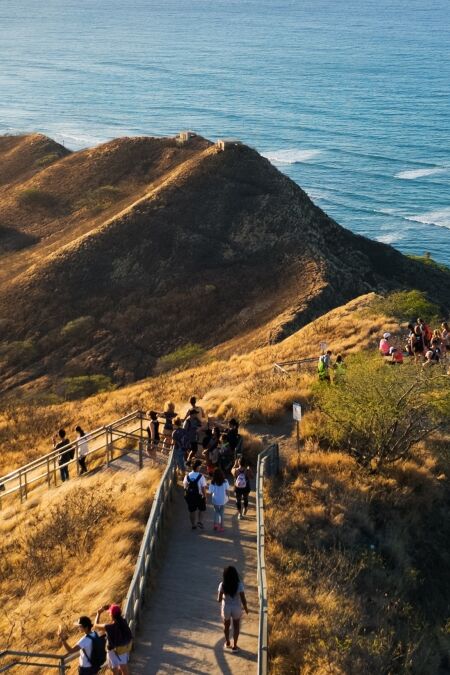


From slick red clay trails to flash-flooding streams, the island’s natural beauty comes with risks every hiker should understand. This guide covers Kauai hiking safety essentials, helping you prepare for Hawaii hiking dangers and Kauai trail hazards so you can explore confidently and responsibly.
Understanding Kauai’s Hiking Conditions
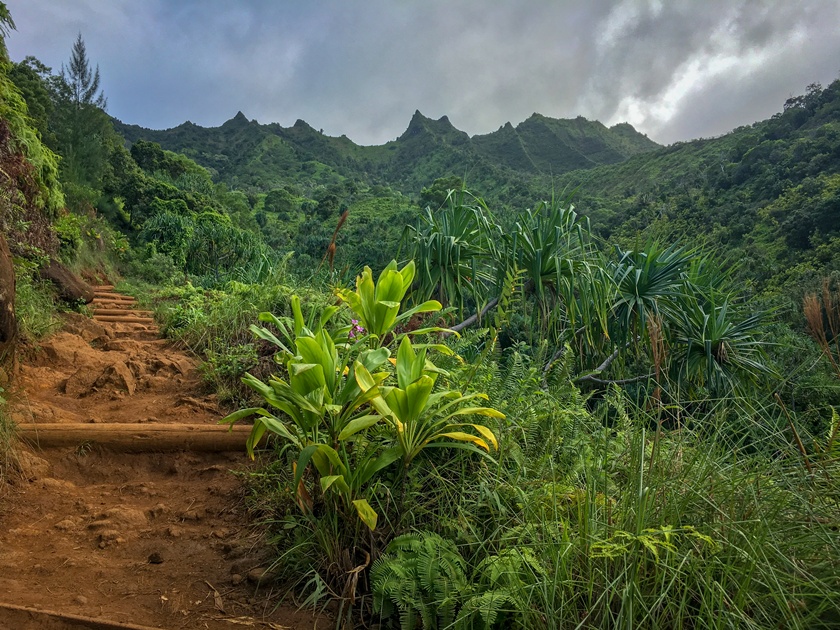
Kauai’s weather changes quickly, especially in mountainous regions like Waimea Canyon, Kokee State Park, and the Na Pali Coast. Sudden rain can turn trails into mudslides and cause streams to swell within minutes. Microclimates mean that while it’s sunny on the coast, the interior can be experiencing heavy rain. The wet season (November–March) typically brings more hazards, but even in summer, isolated downpours can occur. Before setting out, check local weather and trail updates—and always have a backup plan. If you’re unfamiliar with the terrain, consider joining a safety-focused guided tour for expert navigation.
Mud Safety on Kauai Trails
One of the most common—and underestimated—Kauai trail hazards is slippery red clay mud. Even short hikes can become dangerous when footing is unstable.
Tips for staying safe in muddy conditions:
- Wear waterproof hiking boots with aggressive tread.
- Use trekking poles for balance on slick slopes.
- Consider gaiters to keep mud out of your shoes.
- Avoid stepping on vegetation to bypass mud, as this damages the fragile ecosystem.
If a trail is deeply rutted or washed out, turn back—erosion makes recovery difficult and can increase risk of injury.
Stream Crossings & Flash Flood Safety
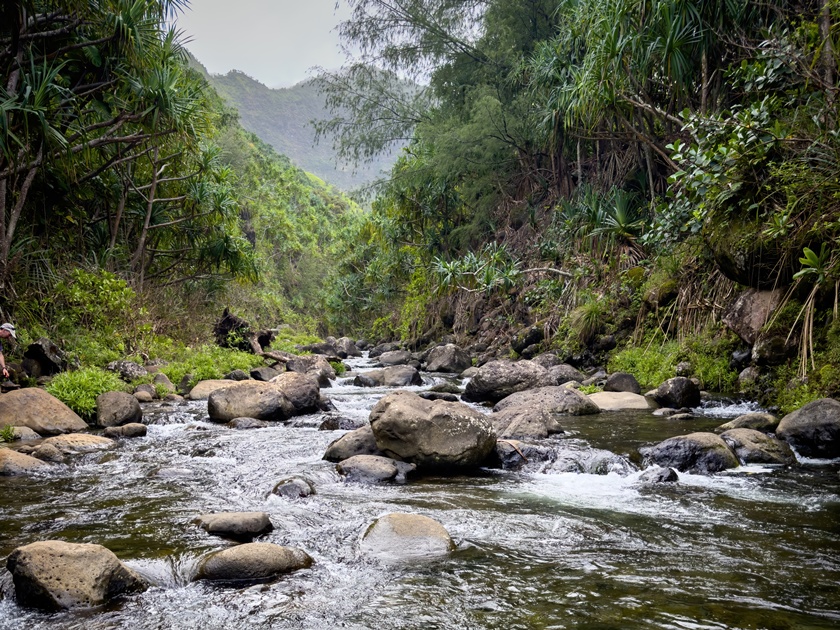
Crossing streams is common on Kauai hikes, but it’s also one of the biggest safety concerns. Kauai flash flood safety starts with awareness: even small streams can become dangerous in heavy rain.
Signs of potential flooding:
- Sudden water discoloration or debris floating downstream.
- Rapidly rising water levels.
- Distant rumbling sounds (indicating a surge upstream).
Safe crossing tips:
- Cross with a group, facing upstream for balance.
- Unbuckle your backpack straps so you can quickly shed the pack if swept away.
- Use trekking poles or a sturdy stick for stability.
If a flash flood occurs, get to higher ground immediately and never attempt to cross. For hikes with known river crossings, a guided hike with trained leaders is the safest option.
Remote Trail Dangers
Many of Kauai’s most breathtaking hikes—like the Kalalau Trail—are in remote areas with limited or no cell service.
Risks on remote trails:
- Navigation challenges – Bring a GPS device and paper map as backup.
- Wildlife encounters – Feral pigs can be aggressive; keep your distance.
- Isolation – Fewer hikers mean fewer chances for help in emergencies.
Always tell someone your route and expected return time, and carry a whistle for signaling.
Leptospirosis Kauai hiking prevention:
Essential Safety Gear Checklist
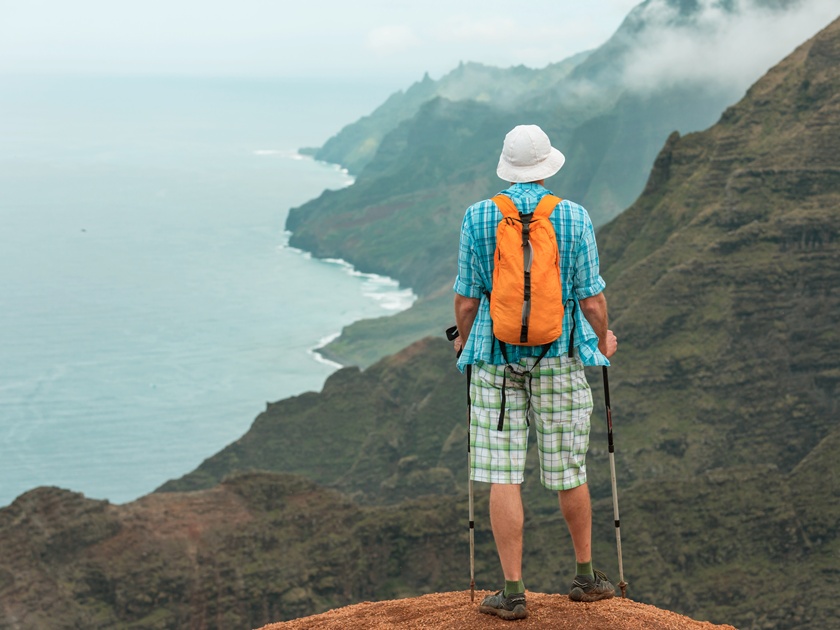
- Hiking boots with strong traction.
- Rain jacket and layered clothing.
- First aid kit & emergency whistle.
- Water filtration system or purification tablets.
- Map, compass, and/or GPS device.
When to Consider a Guided Hike
Joining a safety-focused guided hiking tour offers:
- Local weather and terrain expertise.
- Assistance with challenging river crossings.
- Emergency response training.
This is especially valuable for families, solo hikers, and those new to Kauai’s backcountry.
Final Safety Reminders
Kauai’s trails reward hikers with views found nowhere else in the world—but safety should always come first. Prepare for weather changes, even on sunny mornings. Respect trail closures and conditions. Leave no trace to protect the island’s natural beauty.